Sal and Boa Vista
Two flat, arid islands facing the Sahara: vast beaches, strong winds for kitesurfing and loggerhead turtle nesting beaches from July to October.
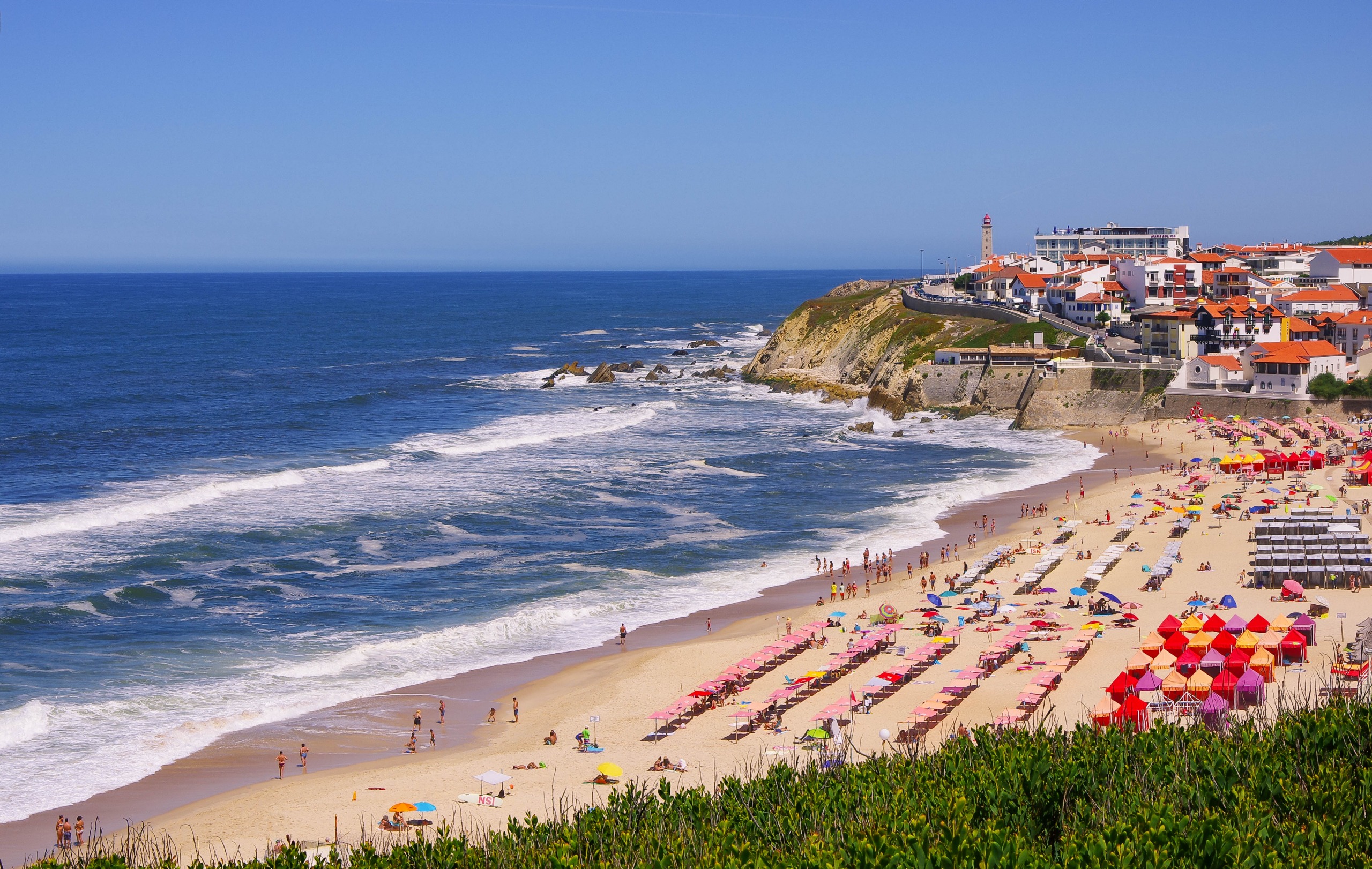
Sal and Boa Vista form the eastern group of the archipelago, two islands set across from the Mauritanian coast, 600 km from the African continent. Geologically, they rank among Cape Verde's oldest: erosion has flattened the volcanic relief, leaving only desert plateaus, salt pans and long stretches of pale sand beaches. Sal's highest point reaches 406 metres at Monte Grande, while Boa Vista peaks at 387 metres at Monte Estância. The contrast is stark with the mountainous islands of Santo Antão or Fogo.
On Sal, life concenters around two hubs. Espargos, in the centre, is home to the international Amílcar Cabral Airport, the country's principal gateway. Santa Maria, at the southern tip, developed around an 8-kilometre strip of sand and now hosts hotels, kitesurfing schools and colourful fishing boats. Further north, Pedra de Lume occupies the crater of a former volcano whose basin, below sea level, filled with salt water: you float here as you would in the Dead Sea. The salt pan was commercially exploited until the 1980s.
Boa Vista, about thirty minutes' flight from Sal, retains a more rural character. Its capital, Sal Rei, has fewer than 8,000 inhabitants and preserves a few colonial facades around the praça Santa Isabel. Inland, the Viana desert unfolds fine sand dunes, carried by Saharan winds for millennia. The villages of Rabil, João Galego, Fundo das Figueiras and Povoação Velha, the island's former first capital, maintain an agro-pastoral way of life around palm groves and maize crops sustained by sparse rainfall.
The climate of these two islands is dry, semi-desert. Annual rainfall rarely exceeds 100 mm, concentrated in a few episodes from August to October. North-easterly trade winds blow much of the year and temper temperatures that range from 22°C in winter to 28°C in summer. This wind consistency explains Sal's specialisation in board sports: kitesurfing, windsurfing and wingfoil are practised on spots like Kite Beach, Ponta Preta and Shark Bay, with winds of 15 to 25 knots between October and May.
Local culture remains Creole, blended with African and Portuguese influences. Morna and coladeira accompany evenings in Santa Maria's bars, while cachupa, a stew of maize, beans and fish or meat, is the staple dish. On Boa Vista, artisanal fishing supplies tuna, mahi-mahi and lobster. Women from the village of Rabil continue traditional pottery, hand-crafted without a wheel. The fishing community of Cabral, in Sal Rei, still organises paddle canoe outings for coastal nets.
Boa Vista also plays a major ecological role. Its beaches at Ervatão, Lacacão and João Barrosa welcome the world's third-largest loggerhead turtle (Caretta caretta) nesting population between late June and October. NGOs Cabo Verde Natura 2000 and BIOS.CV oversee night-time observation and nest monitoring. Offshore, the waters shelter humpback whales from March to May and manta rays much of the year.
Highlights
Pedra de Lume Salt Pans. Bathing in a collapsed volcanic crater transformed into a hypersaline basin, accessed via a tunnel carved into the rock in 1805. Water salinity exceeds 25%.
Kitesurfing at Ponta Preta. World-class spot 3 km west of Santa Maria, with consistent waves and side-on wind from October to May. A world championship event was held here for several years.
Viana Desert, Boa Vista. Crossing mobile dunes in the island's centre by 4x4 or on foot, followed by a stop at the Rabil palm grove and its women's pottery workshop.
Loggerhead Turtle Nesting. Night-time outings supervised by BIOS.CV on Ervatão beaches from July to October, with observation at 5 metres of females coming to nest.
Cabo Santa Maria Wreck. The rusted hull of a Spanish cargo ship that ran aground in 1968 on Boa Vista's northern coast, visible from Atalanta beach, accessible by track.
When to Visit
The most comfortable period runs from November to May: temperatures of 22 to 26°C, clear skies, sea between 21 and 23°C, steady trade winds ideal for kitesurfing and windsurfing. January and February are the coolest months, with water dropping to 21°C and a light wetsuit useful for long sea sessions. From December to March, the harmattan wind can fill the atmosphere with Saharan dust for a few days, reducing visibility—a phenomenon locally called bruma seca.
From July to October, temperatures rise to 28–30°C, water reaches 26°C and wind eases, conditions better suited to diving, snorkelling and turtle observation on Boa Vista. A few thunderstorms may occur in August and September but remain brief. Avoid August for kitesurfing, when wind is too irregular. Our team in Praia recommends March–April to combine board sports, mild weather and humpback whales offshore.
Practical Information
Allow 4 to 6 days on Sal if your focus is sports (kitesurfing, diving); 3 days suffice for a straightforward visit. Boa Vista requires a minimum of 3 days to combine the interior desert, southern beaches and turtle observation in season. The two islands are connected by TICV flights (40 minutes) or ferry (around 3 hours, irregular schedules). Sal's airport handles most European international flights; Boa Vista's is more seasonal.
These islands suit families, contemplatives and board sports enthusiasts, less so hikers who will find their match on Santo Antão or Fogo. Hotel comfort is most developed here, ranging from all-inclusive resorts to Creole guesthouses in Sal Rei. Our team in Praia typically recommends pairing Sal or Boa Vista with Santiago for colonial history, or with São Vicente and Santo Antão for strong landscape contrast between desert and mountain. Combining the two eastern islands alone is possible but risks a certain repetition of scenery.