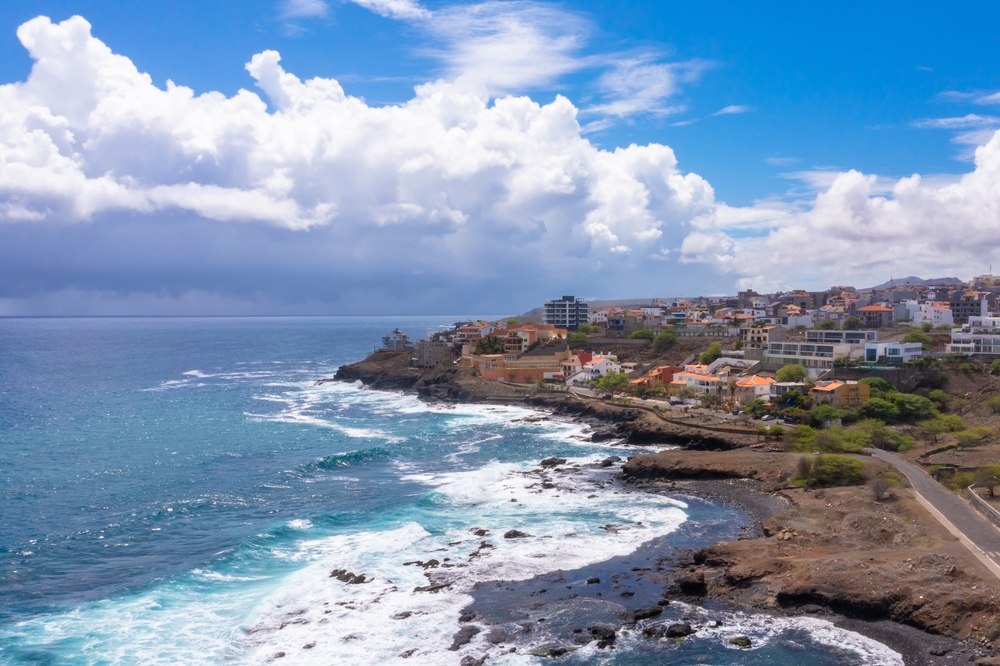
Fogo Island
Fogo, dominated by an active stratovolcano rising to 2,829 meters, blends black lava landscapes, an unusual village within the caldera, and distinctive terroir wine. A truly unique Cape Verdean island.
Fogo is the fourth-largest island in the Cape Verde archipelago by area, dominated by Pico do Fogo, an active stratovolcano reaching 2,829 meters. From São Filipe, the island's capital, black lava slopes contrast with colorful colonial houses. The island produces a volcanic terroir wine renowned throughout the archipelago. Its spectacular geography and history linked to recent eruptions make it a destination apart in the Atlantic.
Practical information at a glance
- Access from Santiago: regular flights from Praia (Aristides Pereira de Boa Vista international airport or Praia airport) to São Filipe airport; ferry crossings also available.
- Recommended duration: 3 to 5 days to combine volcano climbing, visiting Chã das Caldeiras and exploring São Filipe.
- Gear for the climb: hiking boots essential, warm clothing (temperatures at the summit are considerably cooler than the coast).
- Guide required: climbing Pico do Fogo must be done with a local guide — inquire with operators in Chã das Caldeiras.
- Accessibility: limited for volcanic zones; São Filipe is partially accessible.
What to see
Fogo's landscape divides into two distinct worlds. On the coast, São Filipe preserves its sobrados, multi-story houses of Portuguese influence with ochre and blue façades. Inland, the caldera of Chã das Caldeiras is a volcanic cirque several kilometers in diameter where a few hundred inhabitants live among the 2014–2015 lava flows. Pico do Fogo dominates the landscape, visible from the sea tens of kilometers away.
History and context
Fogo was among the first islands colonized by the Portuguese in the 15th century. Its name comes directly from the volcano. The island has experienced several major eruptions; the most recent, in 2014–2015, destroyed much of the village of Portela in the caldera. Inhabitants returned to rebuild on the cooled lava flows, testifying to a deep attachment to this volcanic land. Wine produced in the caldera, made from Verdelho grape varieties, benefits from unique volcanic ash soil.
Highlights of the visit
Climbing Pico do Fogo
The summit at 2,829 meters is reached over several hours from Chã das Caldeiras. The ascent across black ash slopes is physically demanding. On clear days, from the top the view encompasses the entire island and sometimes the island of Brava. The rapid descent through loose ash is among the most memorable moments of the trek.
Chã das Caldeiras
This unusual village sits within the crater. Stone lava houses border vineyards and bean fields. The 2014 lava flows froze part of the landscape into a black mineral desert. Several families offer lodging and wine tastings directly at their cellars.
São Filipe and its colonial architecture
The island's capital deserves half a day. The sobrados of the historic center, cobbled streets and ocean views from the cliff edge compose a typical tableau of Cape Verdean architecture with Lusophone influence. The local market is lively on weekday mornings.
Fogo wine
The Chã das Caldeiras cooperative produces white and red wines recognized across the islands. Tasting on-site in a volcanic setting is a rare gastronomic experience. The dry white wine from Verdelho grapes is the most widely exported.
Photography tips
Morning light is ideal for photographing Pico from the caldera, before clouds accumulate at altitude. The 2014 lava flows offer striking contrasts with the rebuilt houses. In São Filipe, the golden hour in late afternoon illuminates the colonial façades. Avoid flash in tasting cellars.
Location and access
Fogo lies in the Sotavento islands archipelago, west of Santiago. São Filipe airport receives flights from Praia and other islands. Ferries regularly connect Fogo to Santiago and to the neighboring island of Brava to the west. Within the island, aluguer (shared taxis) circulate between São Filipe and Chã das Caldeiras.
Nearby attractions
- Brava Island — Cape Verde's smallest inhabited island, accessible by ferry from Fogo, known for its flowers and tranquility.
- Santiago Island — the main island of the archipelago, with Praia the national capital and the historic site of Cidade Velha.
- Cidade Velha — the first European settlement in the tropics, listed as a UNESCO World Heritage site, on Santiago.
Frequently asked questions
The dry season, from November to June, offers the best conditions for volcano climbing. During the rainy season (July–October), clouds may obscure the summit and trails can become slippery.
Yes. Climbing with a local guide is strongly recommended and often mandatory depending on conditions. Guides are found in Chã das Caldeiras. They know the routes and risks associated with volcanic terrain.
Daily flights connect Praia airport to São Filipe airport in less than an hour. The ferry is a slower but scenic alternative, with several departures per week.
Yes. Several families in Chã das Caldeiras offer simple guestrooms. Staying on-site allows you to start the climb early in the morning and avoid afternoon clouds.
Pico do Fogo is active — the last eruption was in 2014–2015. Outside periods of activity, visiting is possible. Check the volcano's status before departure and follow local authorities' guidelines.
The Chã das Caldeiras cooperative is the main venue for tasting and purchasing. Some São Filipe restaurants also offer local wine on their menus.