Complete Cap-Vert guide
The Cape Verde archipelago stretches 500 km from the Senegalese coast, scattered across ten inhabited islands separated by contrasts: the mineral dryness of Sal and Boa Vista on one side, the green valleys of Santo Antão on the other. From our agency based in Praia, on Santiago, we craft stays that combine at least two islands, since each tells a different story of Creole settlement born in the 15th century.
On Santo Antão, paved trails connect Ponta do Sol to Cova through sugarcane valleys and villages perched at 1000 m. São Vicente, and its city of Mindelo, concentrates the musical life inherited from Cesária Évora: bars on Lisboa street program morna and coladeira almost every evening. Fogo, a volcanic island dominated by Pico at 2829 m, shelters a village built within the caldera itself, where vines are cultivated on black ash. Sal and Boa Vista, flatter and more arid, attract those seeking long beaches and kitesurfing from November to April.
For a first trip, plan 10 to 14 days and a maximum of two to three islands: domestic flights and ferries require time. We guide you based on the season and your pace.
The regions of Cape Verde
Each region has its own personality: climate, landscapes, pace of life and ways of traveling. Our local team helps you choose the combination that suits you.
Santiago
Santiago's main island and home to the capital Praia, Santiago concentrates the archipelago's history. Cidade Velha, the first European trading post under the tropics founded in 1462, preserves its fortress and pillory listed as UNESCO World Heritage sites. Inland, Serra Malagueta peaks at 1064 m and offers hiking trails through lusher vegetation than on the coast. Assomada markets, on Wednesdays and Saturdays, showcase the island's rural and badiu character. Dry, warm climate year-round around 25-28°C, with some rainfall between August and October.
Santo Antão
The greenest island in the archipelago, Santo Antão is reached by ferry from Mindelo in one hour. The north and east concentrate the agricultural valleys of Paúl and Ribeira Grande, planted with sugarcane, coffee and banana trees. Paths paved during colonial times connect Cova, a former crater, to Ponta do Sol via a 5-hour descent through hamlets clinging to the hillside. Hikers typically spend 4 to 6 days here. Grogue, a sugarcane spirit, is still distilled in traditional trapiches that can be visited in Paúl.
São Vicente and Mindelo
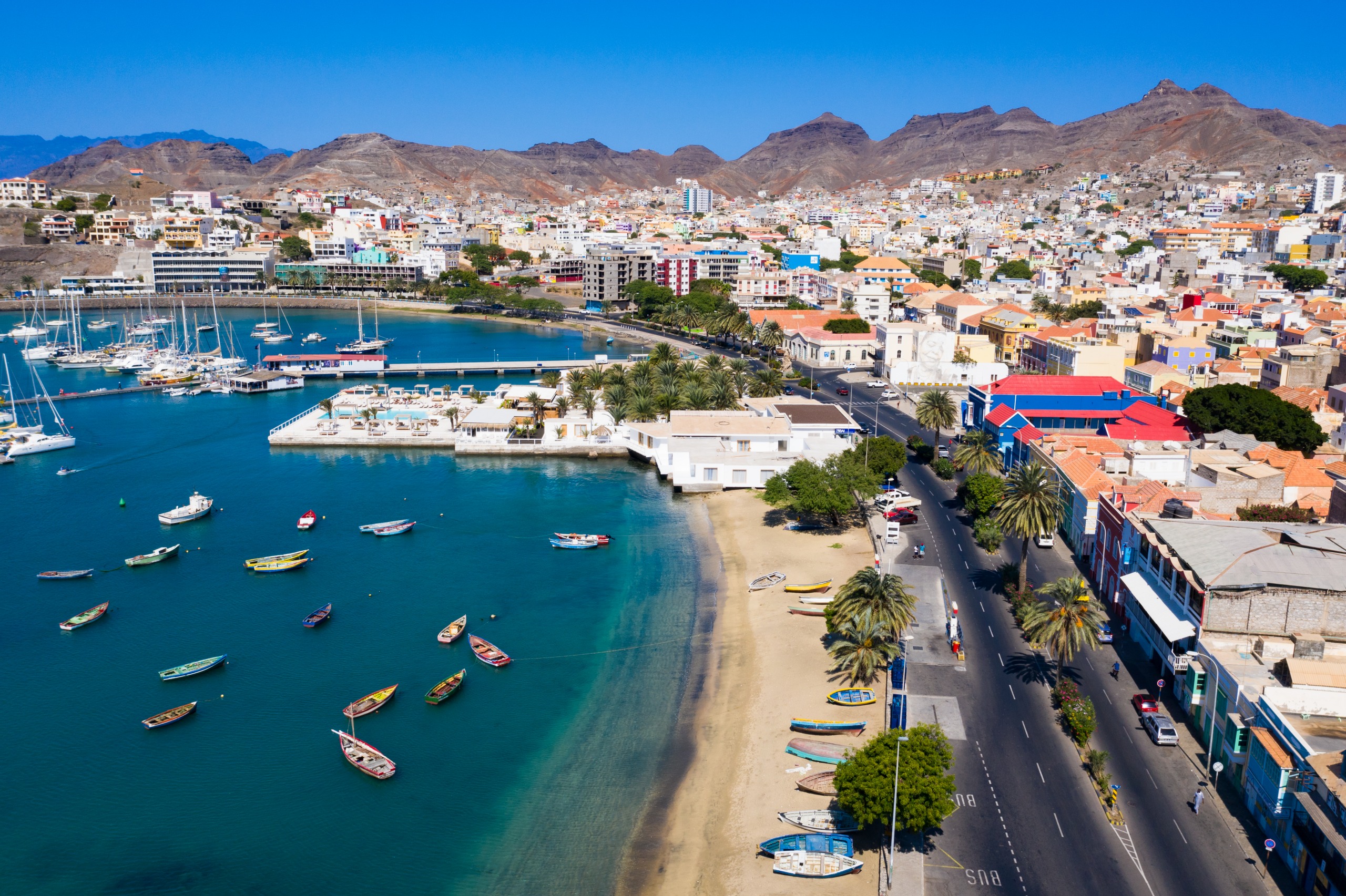
São Vicente is dry and mineral, but Mindelo, its port capital, is the cultural heart of Cape Verde. The bay of Porto Grande, shaped by a submerged ancient crater, welcomes a lively port and an old town with colorful colonial houses. Musical evenings extend into the bars of Rua de Lisboa and around Praça Nova. February's carnival rivals Rio's on an island scale. To enjoy the beach, Praia Grande and Baía das Gatas, 15 km north, are accessible by taxi.
Fogo
Volcanic island dominated by Pico do Fogo (2829 m), still active, with its last eruption dating back to 2014. Inside the caldera, the village of Chã das Caldeiras thrives on the ashes: its inhabitants cultivate vines and produce a full-bodied red wine, Manecom. Climbing Pico takes 3 to 4 hours, departing before dawn, across unstable scoria terrain. São Filipe, the main town, lines its Portuguese sobrados along the cliff facing the ocean. Plan for 3 days on the island to explore the volcano and coastline.
Sal and Boa Vista
The two eastern islands are the most arid and flattest in the archipelago. Sal concentrates the international airport of Espargos and the beaches of Santa Maria, expanses of white sand spanning 8 km swept by trade winds. Kitesurfing and windsurfing are practiced there from October to May, with consistent winds of 15 to 25 knots. Boa Vista, wilder, offers the beaches of Santa Mónica and Chaves, deserted for kilometers on end. From July to October, loggerhead sea turtles come to nest there, and guided observation is conducted with local associations.
Explore by theme
Unique experiences tailored to every traveler.
Culture & Heritage
Temples, musées, sites historiques
Nature & Landscapes
Parcs nationaux, montagnes, forêts
Sea & Beaches
Littoral, îles, sports nautiques
Wildlife & Biodiversity
Observation animale, sanctuaires, réserves
Activities & Adventure
Trek, kayak, escalade, sports outdoor
Gastronomy
Cuisine locale, marchés, cours de cuisine
We use cookies to improve your experience and measure our site's audience. You can choose what you accept. Learn more.