Plateau – Historic Centre of Praia
Plateau – Historic Centre of Praia
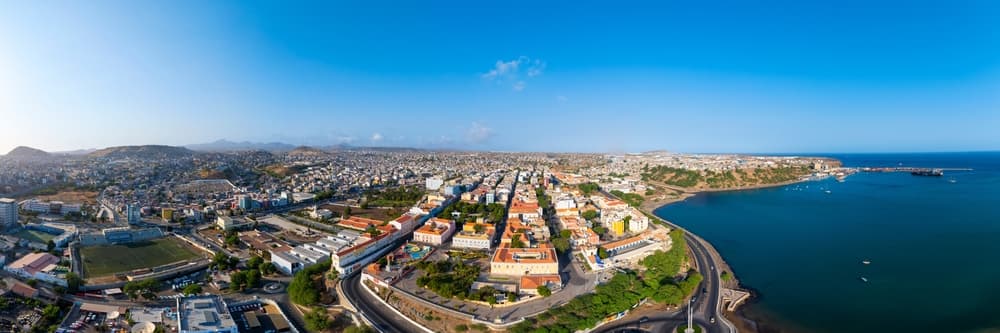
The Plateau is the historic centre of Praia, perched on a basaltic promontory. Colonial squares, colourful facades, a bustling market and ethnographic museum: two to three hours are enough to grasp its essence.
The Plateau is the administrative and historic heart of Praia, capital of Cap-Vert, set upon a tabular promontory that overlooks the bay. This is where the Portuguese colonial city developed from the 19th century onwards: shaded squares, stone official buildings, a lively central market and colourful facades with wooden shutters. In half a day, you can read the country's history and take the pulse of contemporary Cape Verdean life.
Practical info at a glance
- Access: the Plateau is accessible on foot from the port or by shared taxi (aluguer) from any neighbourhood in Praia.
- Admission: free to stroll through the streets and public squares.
- Recommended duration: 2 to 3 hours for a leisurely visit.
- Dress code: no particular restrictions in public spaces; smart casual recommended inside official buildings.
What to see
The Praça Alexandre Albuquerque (main square) contains the essentials: the bust of the eponymous colonial governor, benches beneath flame trees and café terraces where locals debate the issues of the day. Surrounding it, the Palácio da Cultura, the Cathedral Nossa Senhora da Graça and several government buildings in grey volcanic stone form a cohesive architectural ensemble. The Mercado de Sucupira, below the plateau, overflows with fabrics, spices and handicrafts.
History and context
Praia was officially founded in the 18th century on the island of Santiago, but it was during the 19th century that the Plateau truly urbanised, replacing Cidade Velha as the administrative capital. The name "Plateau" simply describes the geography: a basaltic mesa some twenty metres above sea level, naturally defensible. After independence in 1975, colonial buildings were repurposed as ministries, museums and cultural centres.
Highlights of the visit
Praça Alexandre Albuquerque
The social heart of the Plateau, the square brings together students, newspaper vendors and civil servants at lunch time. The pastel facades surrounding it offer a photogenic backdrop without pretence.
The Museu Etnográfico
Housed in a former colonial building, this museum displays everyday objects, traditional musical instruments and costumes from the different islands. A solid introduction to Cape Verdean cultural diversity.
Mercado de Sucupira
A popular market below the Plateau, essential for hand-woven pano di terra fabrics, local spices and handicraft replicas. The atmosphere is dense and authentic.
The Cathedral Nossa Senhora da Graça
Praia's main place of worship, austere and whitewashed, it dominates the Plateau landscape. The interior is peaceful and cool, a welcome respite in the intense heat.
Photography tips
Morning light (before 9 a.m.) is ideal on the Praça's colourful facades: long shadows, often clear skies. In late afternoon, the edge of the plateau offers an unobstructed view over Praia bay and the neighbourhoods of Várzea and Achada Santo António. Avoid flash inside the cathedral and always ask permission before photographing people at the market.
Location and access
The Plateau occupies the geographic centre of Praia, on the island of Santiago. Shared taxis (aluguers) serve the district from across the city. On foot from the port, the climb to the Plateau takes about ten minutes. The main streets are paved and relatively flat once at the top, which facilitates mobility. For a broader historical context, a guided tour combining the Plateau and Cidade Velha is often offered by local agencies.
Nearby
- Cidade Velha — Europe's first colonial city in sub-Saharan Africa, UNESCO World Heritage listed, about fifteen kilometres west of Praia.
- Quebra Canela Beach — Praia's urban beach, quickly accessible from the Plateau, popular with locals in the late afternoon.
- Tarrafal — Village in northern Santiago, known for its colonial prison camp converted into a museum and turquoise waters.
Frequently asked questions
Cap-Vert enjoys a stable climate year-round. The dry season (November to July) offers sunny days and pleasant temperatures. In August-September, the harmattan can bring dust and reduce visibility.
Yes, this is a classic combination. The Plateau is visited in the morning, then a taxi or aluguer can take you to Cidade Velha for the afternoon. Plan a full day to enjoy both sites without rushing.
The Plateau is Praia's most visited and monitored district. As in any busy city centre, remain aware of your belongings, particularly at Sucupira market.
Smart casual is recommended (shoulders and knees covered). There is no strict posted dress code, but respect for places of worship applies.
Sucupira market, below the Plateau, is the best place for pano di terra fabrics, pottery and ceramic objects. Polite negotiation is customary.
Local agencies partnered with Nomadays offer English-speaking guided walking tours of the Plateau, often combined with an excursion to Cidade Velha. Contact the agency to arrange your bespoke programme.
Interested in this visit?
We can include it in your personalised itinerary.