17 articles to prepare your trip
Deep in the heart of Santiago island, Serra Malagueta Natural Park offers hiking trails, pristine vegetation, and commanding views over verdant valleys — a striking contrast to the arid Cape Verdean coast.
On the Plateau of Praia, the Sala-Museu Amilcar Cabral traces the life and struggle of the founder of the Cape Verdean and Guinean independence movement through photographs, documents and personal objects.
Quebra Canela is the popular beach of Praia, capital of Santiago. Black volcanic sand, rocky formations and authentic local atmosphere just steps from the historic center.
On the Plateau of Praia, the Museu Etnográfico da Praia traces the material culture and popular traditions of the Cape Verdean archipelago, from panos de terra to fishing tools.
At 750 metres elevation, Monte Verde dominates Mindelo and Porto Grande Bay. The highest point of São Vicente, it can be reached on foot or by vehicle for a unique panorama over the Cape Verdean archipelago.
Perched above Mindelo, Fortim d'El Rei is a remnant of Portuguese military architecture offering exceptional views over São Vicente Bay and its neighboring islands.
Perched above Mindelo, the Dona Amélia Lighthouse offers a breathtaking panorama over Porto Grande Bay and the colorful rooftops of the city. An unmissable historic and visual landmark of São Vicente.
A miniature replica of Lisbon's iconic tower, the Torre de Belém of Mindelo stands on São Vicente's waterfront. A historic and photogenic landmark at the heart of Cape Verde's most cultural city.
Sucupira Market, located in the Fazenda district of Praia, is Cape Verde's principal popular marketplace. Wax fabrics, spices, handicrafts and daily bustle: an immersion into Cape Verdean urban life.
Perched on a rocky promontory above Cidade Velha, the Fort of São Filipe (1587–1593) protected Africa's first European colonial city. With its cannons, bastions, and commanding views over the bay, it stands as a major historical landmark on Santiago island.
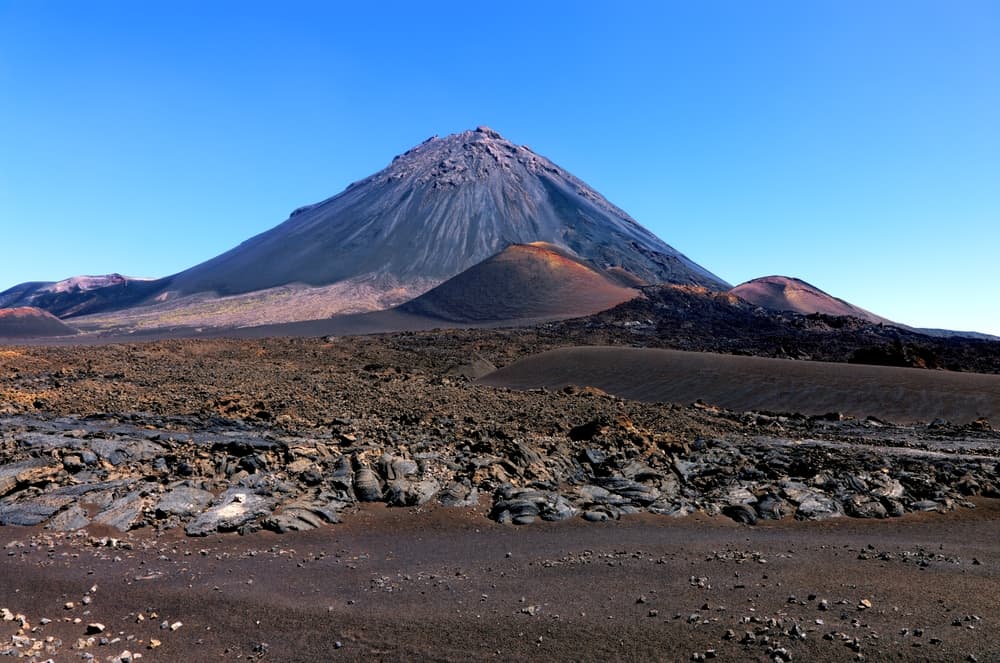
At 2,829 m, Pico do Fogo is Cape Verde's highest peak and one of the Atlantic's most impressive active volcanoes. A demanding ascent, a inhabited caldera, and black lava landscapes make this island a unique experience.
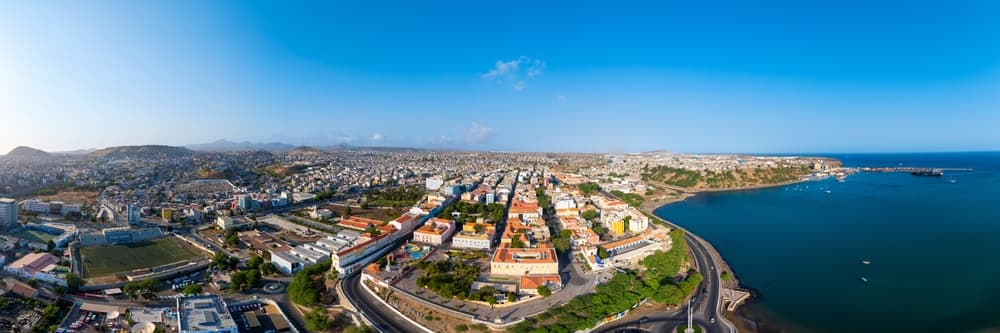
The Plateau is the historic centre of Praia, perched on a basaltic promontory. Colonial squares, colourful facades, a bustling market and ethnographic museum: two to three hours are enough to grasp its essence.
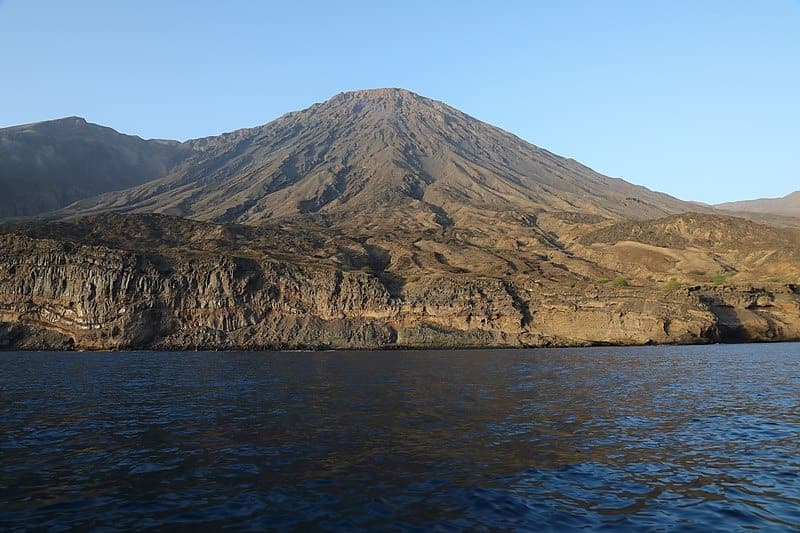
Cape Verde's second-highest summit at 1,979 metres, Topo de Coroa can be climbed in a day from the village of Curral das Vacas on Santo Antão island.
Tarrafal
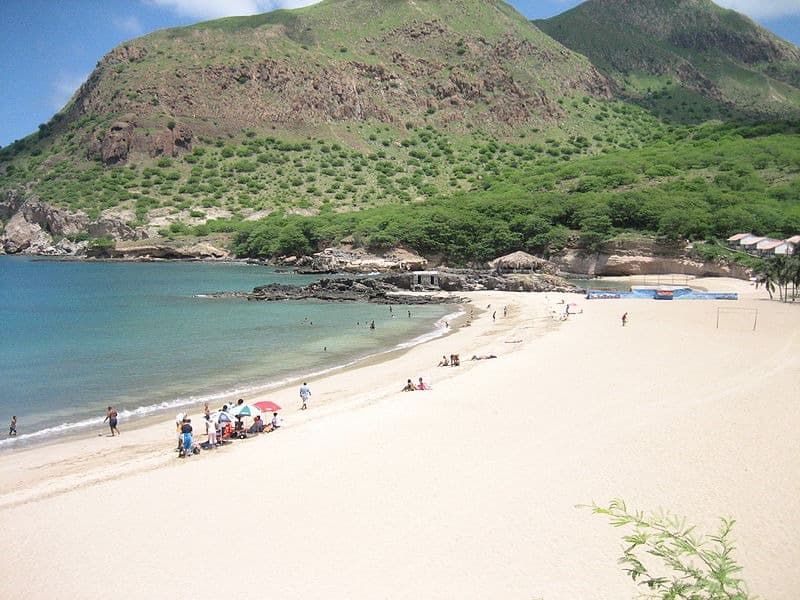
In the north of Santiago Island, Tarrafal brings together a beach fringed with coconut palms, a fishing village and the former political prison camp from the Salazar era, now a museum.
Monte Trigo
A fishing village accessible only on foot or by boat, Monte Trigo rewards hikers with a 10 km trail at the foot of Topo de Coroa, on Santo Antão.
Plage de Laginha
In Mindelo, on the island of São Vicente, Praia da Laginha is an 800-meter urban beach with calm waters, ideal for swimming and watching sunsets over Santo Antão.
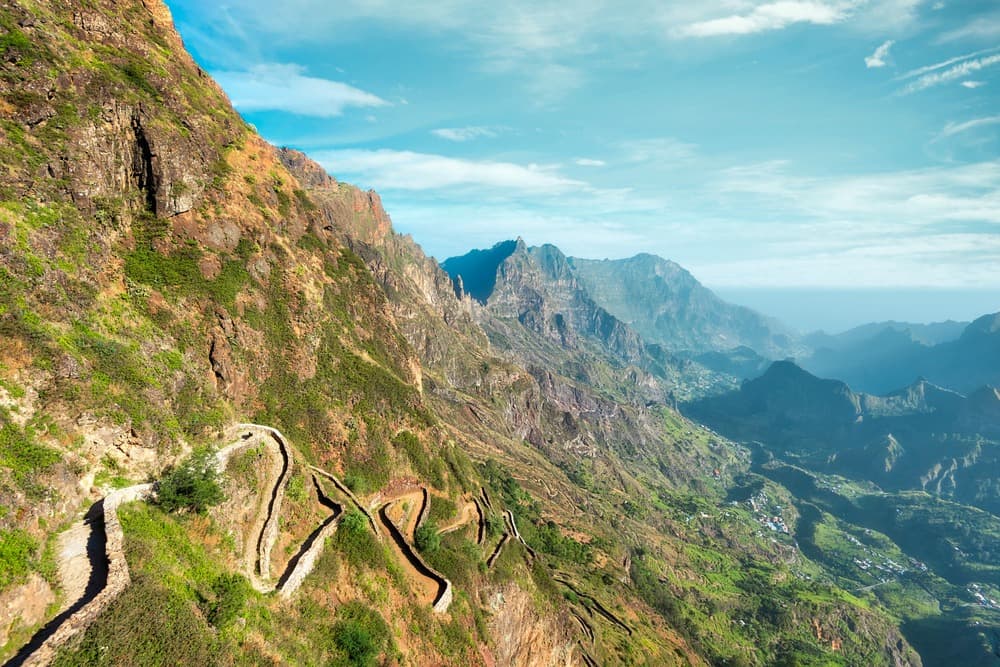
A volcanic caldera on Santo Antão with cultivated floor and wooded slopes, Cova Crater marks the departure point for Cape Verde's most renowned hikes.
17 of 17 results
We use cookies to improve your experience and measure our site's audience. You can choose what you accept. Learn more.